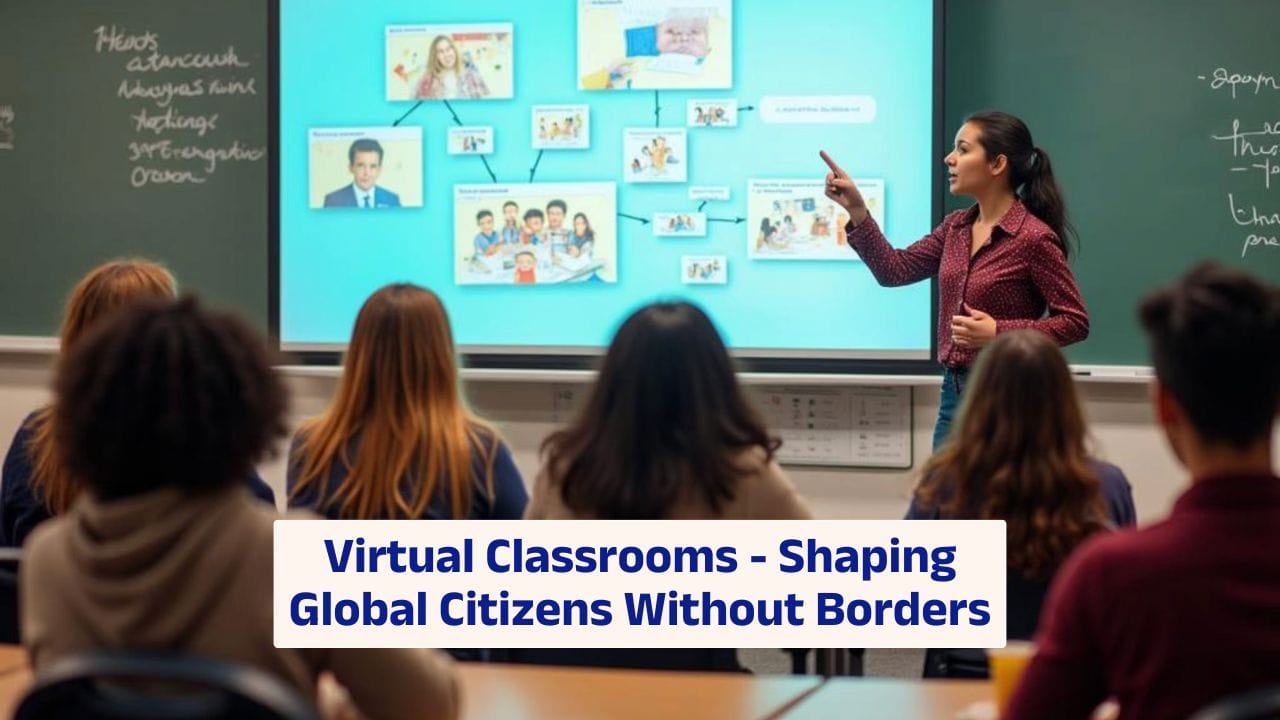
In today’s hyper-connected world, the traditional idea of a classroom has evolved beyond four walls, desks, and chalkboards. Thanks to technology, education is no longer limited by geography. Enter virtual classrooms — digital spaces where students from around the world gather, learn, and grow together.
These classrooms are redefining education, creating global citizens who are equipped with a broader worldview and a deeper knowing of cultures and ideas beyond their own.
Connection
One of the most powerful things about virtual classrooms is the way they connect people. Picture a student in Kenya collaborating on a science project with a peer from Canada, or a teacher in Brazil leading a lesson for kids in five different countries. These connections create a unique learning environment that goes way beyond the textbook.
The real magic happens in the conversations — when students share different cultural perspectives, discuss global issues, and learn how to respect diverse viewpoints. It’s not just about learning facts; it’s about building empathy and understanding.
Flexibility
Traditional classrooms usually run on fixed schedules and require students to be physically present. But virtual learning breaks those barriers. You can join a class from anywhere, as long as you have a device and internet access. That’s a game-changer for students who live in remote areas or who have other commitments.
Learning becomes flexible, and that flexibility gives students more control. They can rewatch lessons, learn at their own pace, and even choose courses from schools across the world. Education is no longer a one-size-fits-all model.
Inclusion
Virtual classrooms promote a level of inclusivity that’s often hard to achieve in physical schools. Students with disabilities, those facing socio-economic challenges, or learners who simply don’t thrive in traditional classrooms can now find options that suit their needs.
Plus, many virtual programs offer language support, subtitles, and various accessibility tools that help remove learning barriers. Everyone gets a fair shot at education, regardless of their background.
Affordability
Let’s face it — studying abroad is expensive. Travel costs, accommodation, tuition, and living expenses quickly add up. But with virtual classrooms, students can access international education without ever leaving home. That alone saves thousands of dollars.
Many institutions also offer online courses at a fraction of the in-person cost. And because you’re not tied to a physical location, you don’t have to move or commute. Education becomes more budget-friendly, and that opens doors for a much larger group of learners.
Engagement
Worried that online classes are boring? Think again. Virtual learning environments today are more interactive than ever. They use breakout rooms, real-time polls, gamified lessons, and discussion boards to keep students engaged.
Teachers also have access to tools that help track participation and performance. That means they can adjust lessons to better suit individual students. Learning becomes more personalized, and that makes a huge difference in how much students retain.
Globalism
Virtual classrooms naturally foster a global mindset. When students from different corners of the world learn together, they gain firsthand insight into other cultures, traditions, and viewpoints. It’s like traveling the globe without a passport.
This exposure helps build the kind of skills the modern world demands — cross-cultural communication, problem-solving, adaptability, and collaboration. In a world where companies operate across borders, these skills are pure gold.
Here’s a quick look at the benefits of virtual classrooms:
| Benefit | Description |
|---|---|
| Connectivity | Links students and teachers worldwide for shared learning |
| Flexibility | Learn from anywhere, anytime |
| Inclusion | Accessible to diverse learners and needs |
| Affordability | Cuts down education-related costs |
| Engagement | Interactive tools keep students involved |
| Globalism | Builds international understanding and communication skills |
Challenges
Of course, it’s not all smooth sailing. Virtual classrooms come with their own set of challenges. Not everyone has reliable internet or the tech needed to participate. Time zones can make live interaction tricky. And without the social aspect of in-person schooling, some students feel isolated.
But the good news? These are problems we can solve. Governments, schools, and tech companies are already working on improving access and support. And as virtual learning continues to evolve, it’s getting better every day.
We’re standing at the edge of an education revolution. Virtual classrooms are tearing down borders, giving every student the chance to become a global citizen. They’re helping us build a world where learning is limitless — and that’s a future worth investing in.
FAQs
What is a virtual classroom?
It’s an online learning space where students and teachers connect digitally.
How do virtual classrooms help global learning?
They allow students worldwide to learn and share together in real-time.
Are virtual classrooms affordable?
Yes, they cut travel, housing, and often tuition costs significantly.
Do students interact in online classes?
Yes, using chats, video calls, polls, and group projects.
Can virtual learning replace physical schools?
It can complement or replace them depending on the needs and context.