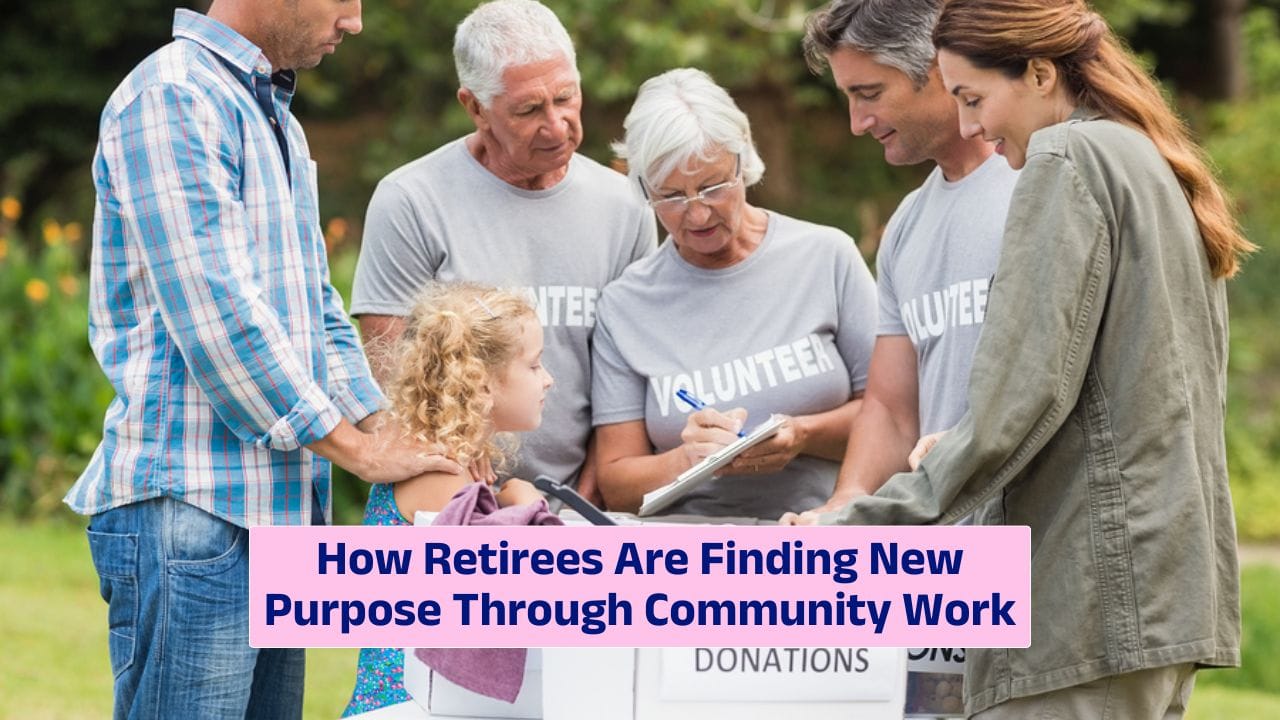
Retirement used to mean slowing down, but not anymore. Today’s retirees are doing far more than playing golf or relaxing on the porch. They’re rolling up their sleeves and diving into something meaningful—community work.
From mentoring youth to organizing food drives, retirees are proving that purpose doesn’t retire with your job. In fact, many say they’ve never felt more fulfilled. So, what’s behind this shift, and why are so many older adults choosing to give back?
Shift
Retirement once marked the end of a long working life and the beginning of rest. But for many today, it’s seen as the start of a new chapter. With longer life expectancy, better health, and more time on their hands, retirees are looking for ways to stay active and make a difference.
Instead of stepping back, they’re stepping forward into roles that matter. Whether it’s helping at a local shelter, teaching skills, or joining nonprofit boards, community work is becoming a powerful way to stay engaged.
Motivation
Why are retirees turning to community work? It’s not just about staying busy. It’s about meaning. After decades in careers, many retirees crave purpose beyond their paycheck.

They want to feel useful, stay connected, and give back to the community that supported them. Others are driven by a desire to leave a legacy or continue learning. For some, volunteering helps ease the transition from full-time work to a more flexible lifestyle without losing structure or identity.
Roles
There’s no shortage of roles retirees can take on in community work. With decades of experience, wisdom, and time, they’re incredibly valuable assets to any organization.
Here are just a few ways retirees are getting involved:
- Mentoring students or young professionals
- Tutoring in reading, math, or computer skills
- Assisting food banks and soup kitchens
- Supporting environmental cleanups
- Leading community workshops or wellness classes
- Serving on boards or advisory panels
- Helping nonprofits with fundraising or administration
Their skill sets often match up perfectly with what many communities need—guidance, organization, and consistency.
Benefits
Community work doesn’t just help others—it’s good for retirees too. Studies show that volunteering can lead to better mental and physical health in older adults. It reduces isolation, boosts mood, and can even extend life expectancy.

Here’s a quick comparison of the benefits:
| Benefits for Retirees | Benefits for Communities |
|---|---|
| Improved mental health | Gained knowledge and support |
| More social connections | Increased volunteer capacity |
| Sense of daily purpose | Stronger neighborhood ties |
| Opportunities to learn | Shared wisdom and skills |
| Physical activity (in some roles) | Better resource management |
This mutual benefit creates a powerful win-win. Everyone involved grows stronger together.
Flexibility
One of the best parts of community work in retirement is flexibility. Unlike a job, it doesn’t come with strict hours or stress. Retirees can choose when and how often they want to get involved—weekly, monthly, or just for special events.
This allows them to balance family, hobbies, travel, and rest while still making an impact. It’s purpose without pressure, and that’s a key reason why it’s so appealing.
Community
Community work helps retirees stay connected. Isolation can be a real issue for older adults, especially after leaving the workforce. But volunteering opens up new social circles, friendships, and intergenerational relationships.

It also gives retirees a front-row seat to the needs and strengths of their neighborhoods. They stay informed, involved, and empowered. In many ways, they become the backbone of local support systems.
Inspiration
The stories coming out of this trend are truly inspiring. A retired accountant teaching financial literacy to teens. A former nurse organizing health clinics. A couple managing a food pantry out of their garage. These aren’t rare examples—they’re becoming more common every day.
Retirees are showing the world that purpose isn’t tied to age or career. It’s tied to contribution. And there’s no age limit on making a difference.
Retirement doesn’t have to mean stepping away from impact—it can mean stepping into it. By redefining what it means to retire, older adults are proving that purpose is lifelong. Through community work, they’re not just filling time—they’re filling hearts, both their own and others’. It’s not about what they’ve stopped doing. It’s about what they’ve started.
FAQs
Why do retirees choose community work?
To stay active, find purpose, and give back meaningfully.
What roles suit retired volunteers?
Mentoring, tutoring, event help, and nonprofit support.
Is volunteering good for health?
Yes, it improves mental health and reduces loneliness.
How much time do retirees commit?
It’s flexible—weekly, monthly, or just for events.
Can anyone volunteer after retirement?
Absolutely, anyone can contribute skills or time.