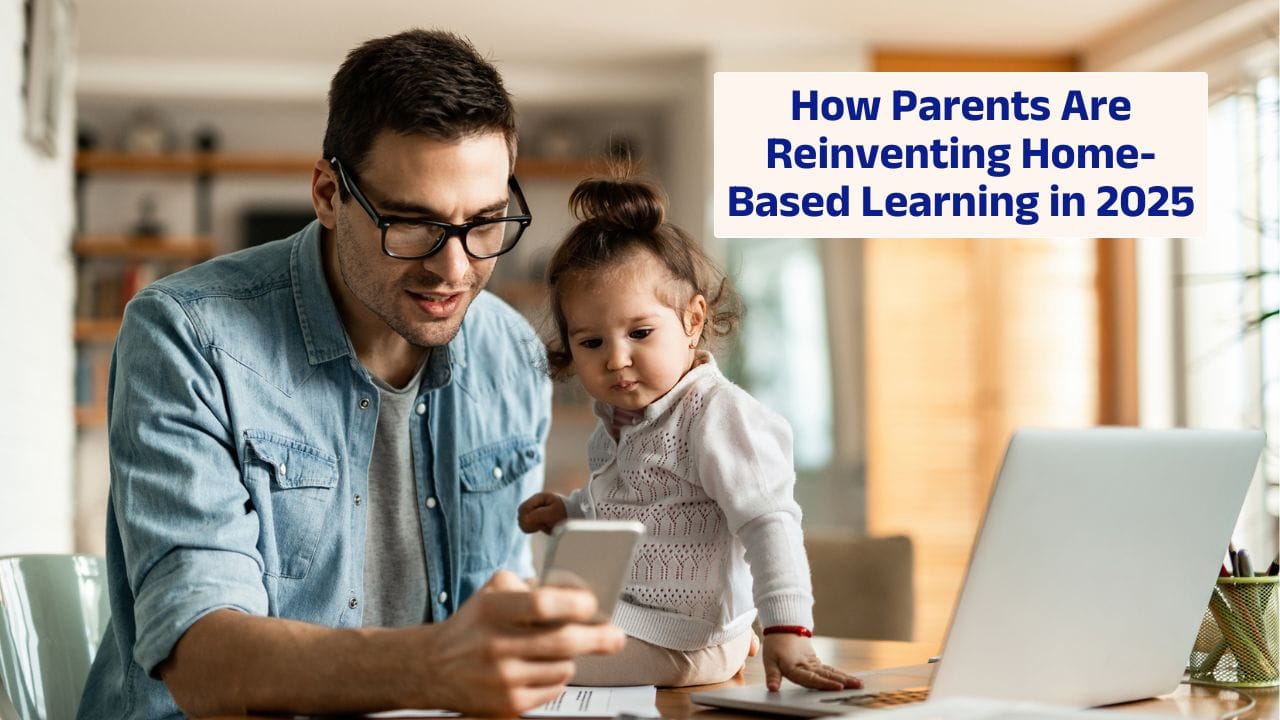
In 2025, education is going through a quiet revolution—and it’s starting at home. Parents are no longer just homework helpers or school liaisons. They’re becoming active participants, even lead facilitators, in their children’s learning journeys.
Home-based learning isn’t just a pandemic solution anymore; it’s evolving into a thoughtful, long-term strategy. Let’s look into how parents are stepping up as first teachers and reshaping the future of education from their living rooms.
Shift
The old model of “leave it to the schools” is fading fast. In its place is a more dynamic, personalized approach where parents play a key role. Families are moving beyond the traditional mindset that learning only happens in classrooms. Instead, they’re embracing flexible routines, learning pods, online tools, and hybrid models that allow learning to fit the child—not the other way around.
Technology, of course, has been a huge driver. In 2025, nearly every household has access to high-speed internet, AI-powered learning apps, and interactive digital curriculums. But tech is just the tool. The heart of this movement lies in parental engagement, intuition, and adaptability.
Skills
Today’s home-based learning doesn’t mean turning your kitchen into a classroom. It’s more about weaving education into everyday life. Cooking becomes a math and science lesson. A walk in the park becomes biology. Watching a documentary turns into a discussion about history or ethics. Parents are teaching critical thinking, time management, and even emotional regulation.
Soft skills are getting more attention too. Parents are intentionally guiding their kids in areas like resilience, empathy, communication, and self-discipline. These are things that often slip through the cracks in traditional systems but are vital for success in a rapidly changing world.
Tools
So how are parents pulling this off? It’s all about smart tools and support systems. Learning platforms like Khan Academy, Prodigy, and Duolingo are now tailored with AI to adapt in real time. Parents are using digital planners, screen-time management apps, and even VR to simulate immersive experiences in science or history.
Let’s look at a few examples:
| Tool Type | Popular Apps (2025) | Purpose |
|---|---|---|
| Learning platforms | Khan Academy, Brainly AI | Core subject support |
| Language learning | Duolingo, LingoLeap | Foreign languages |
| Skill-building | Outschool, DIY.org | Creative and tech skills |
| Parental tools | CoLearn, ParentPal | Tracking and daily scheduling |
| Interactive tech | MetaClass VR, TimePortals | Virtual field trips and labs |
But it’s not all about screens. Many parents are also going old-school with journaling, nature walks, and one-on-one conversations. Balance is key.
Balance
One of the biggest challenges in home-based learning? Drawing the line between being a parent and being a teacher. It’s easy to blur the roles. That’s why structure, even in small amounts, matters. Families are experimenting with “flexi-schedules” that combine blocks of structured time with open-ended exploration.
Here’s a typical day in a reimagined home-learning setup:
| Time | Activity |
|---|---|
| 8:00-9:00 | Morning routine + reading hour |
| 9:00-11:00 | Core subjects with digital tools |
| 11:00-12:00 | Outdoor exploration |
| 12:00-1:00 | Lunch + free time |
| 1:00-2:00 | Project-based learning |
| 2:00-3:00 | Creative time (art/music/coding) |
| 3:00-4:00 | Reflection + journaling |
This type of schedule gives kids the freedom to explore while keeping a healthy rhythm. And parents? They’re learning too. Many are taking online courses themselves, joining peer groups, and sharing resources.
Support
Let’s be real—it takes a village. Parents are leaning on each other more than ever. Virtual co-ops, neighborhood learning circles, and digital forums are filling the gap that schools once did. You’ll find parents swapping science experiments, sharing lesson plans, or even rotating teaching duties in small pods.
Government and private companies are also stepping up. Grants, tax credits, and even “parental learning stipends” are helping families manage the cost and time investment of home-based education.
And educators aren’t being sidelined—they’re becoming partners. Some parents hire certified teachers part-time, or join hybrid schools where kids attend physical classes a few days a week. Collaboration is the new model.
Future
Looking ahead, the line between school and home will likely blur even more. Personalized learning paths powered by AI, global classroom connections, and project-based assessment models are already taking root.
This isn’t about replacing schools—it’s about reimagining what learning looks like. Parents aren’t just filling gaps anymore. They’re becoming co-creators of an education model that’s more human, flexible, and future-ready.
Home-based learning in 2025 is not a trend. It’s a transformation. And parents? They’re right at the center, not just teaching their kids—but learning alongside them.
FAQs
What is home-based learning?
It’s learning that happens at home, led or supported by parents.
Do parents need teaching degrees?
No, but access to resources and support makes a big difference.
What tools do parents use in 2025?
Apps, online platforms, planners, and even virtual reality tools.
Can kids still socialize?
Yes, through pods, co-ops, and hybrid learning setups.
Is this replacing traditional school?
Not replacing, but evolving into a more flexible model.