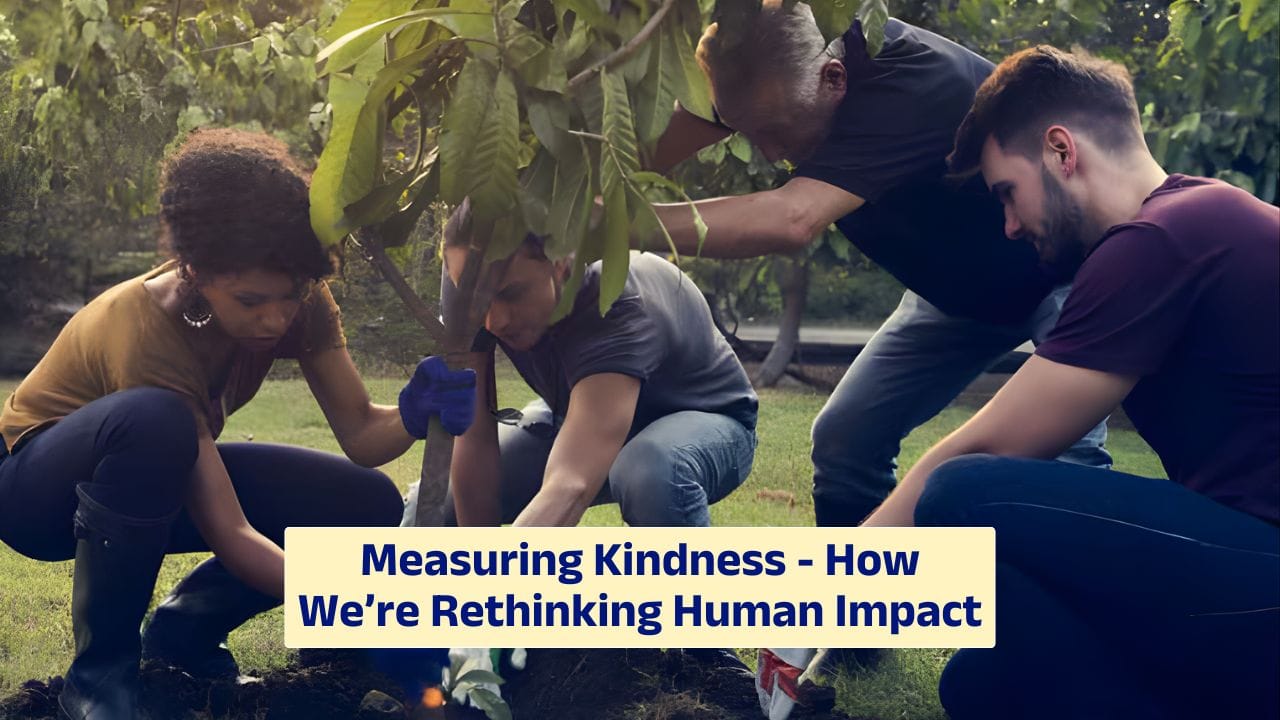
We’re used to measuring things that are easy to track—profits, performance, productivity. But what about kindness? It’s invisible, often spontaneous, and rarely quantified. Yet in today’s world, where emotional intelligence, social responsibility, and community well-being matter more than ever, we’re starting to ask: how do we measure kindness—and why should we?
Kindness used to be something we appreciated but never counted. Now, researchers, businesses, and educators are finding ways to turn this soft skill into a measurable force. Let’s look into the emerging world of kindness metrics and how they’re reshaping our view of human impact.
Shift
The world is shifting from hard results to human-centered outcomes. It’s no longer just about what you achieve but how you make others feel along the way. Companies are being judged not just on profits but on purpose. Schools are promoting empathy alongside grades. Even governments are looking at happiness indexes, not just GDP.
This growing interest in kindness isn’t just a feel-good trend. It’s backed by data. Acts of kindness have been shown to improve mental health, reduce stress, and even increase productivity. So, if kindness can change lives, why wouldn’t we want to measure it?
Metrics
So, how do you put a number on something as intangible as kindness? It turns out, there are a few creative ways to do it.

Here are some new metrics being used to measure kindness:
| Kindness Metric | Description |
|---|---|
| Random Acts Logged | Tracking small kind acts (e.g., compliments, help) |
| Peer Recognition | Points or shout-outs for supportive behavior |
| Empathy Scores | Survey-based tools assessing understanding and compassion |
| Social Impact Index | Measures volunteer hours, donations, community engagement |
| Happiness Surveys | Employee or community mood checks linked to kind actions |
While none of these are perfect, together they give a clearer picture of how kindness shows up in real life. It’s not just about counting nice things—it’s about capturing the ripple effects they cause.
Workplaces
In business, the old rule was “don’t take it personally.” But today, personal connections drive collaboration, retention, and even innovation. Kindness in the workplace isn’t just a bonus—it’s a strategy.
Many companies are now using kindness metrics in performance reviews, employee recognition platforms, and team-building programs. Tools like “kudos boards,” wellness scores, and kindness challenges are being built into HR systems.
Why? Because a kind culture creates psychological safety. When people feel respected and supported, they’re more creative, more loyal, and less likely to burn out. In short, kindness pays off.

Education
In schools, emotional intelligence is becoming just as important as test scores. Teachers are measuring how students treat one another, how well they resolve conflicts, and how much empathy they show.
Some schools have started “kindness report cards,” where students track their own kind acts and reflect on their social behavior. Others use peer feedback systems or journaling to help students build self-awareness.
It’s not about punishing bad behavior—it’s about recognizing and rewarding good character. And over time, that builds healthier school cultures where kindness is the norm, not the exception.
Tech
Even tech platforms are starting to measure kindness. Social media tools are testing features that track positive interactions or reduce harmful comments. Some AI systems are even being trained to recognize tone and promote civil discourse.
Kindness tracking apps, like those that let you log daily good deeds or remind you to compliment someone, are gaining popularity. These tools don’t just gamify kindness—they make it a daily habit.

As technology becomes more human-focused, kindness becomes part of the design. And that’s a huge step forward.
Impact
Ultimately, measuring kindness helps us recognize that success isn’t only about output—it’s about outcomes. It’s about how we leave people feeling. And when we start measuring what really matters, we shift behavior.
Imagine a world where kindness counts as much as performance. Where leaders are evaluated not just on results, but on how well they lift others. Where growth isn’t just measured in revenue, but in relationships.
We’re not there yet—but we’re getting closer. As our metrics evolve, so does our definition of what it means to lead, succeed, and make a difference.
Kindness may be hard to quantify—but when we try, we start to value it more. And when we value it, we build a world that’s not only smarter, but kinder too.
FAQs
Why measure kindness?
To value human impact beyond just results.
What is a kindness metric?
A tool that tracks positive human actions or behavior.
Can kindness improve productivity?
Yes, kindness boosts morale and teamwork.
How is kindness tracked at work?
Through feedback, shout-outs, and well-being tools.
Do schools measure kindness?
Yes, using journals, feedback, and social behavior tracking.