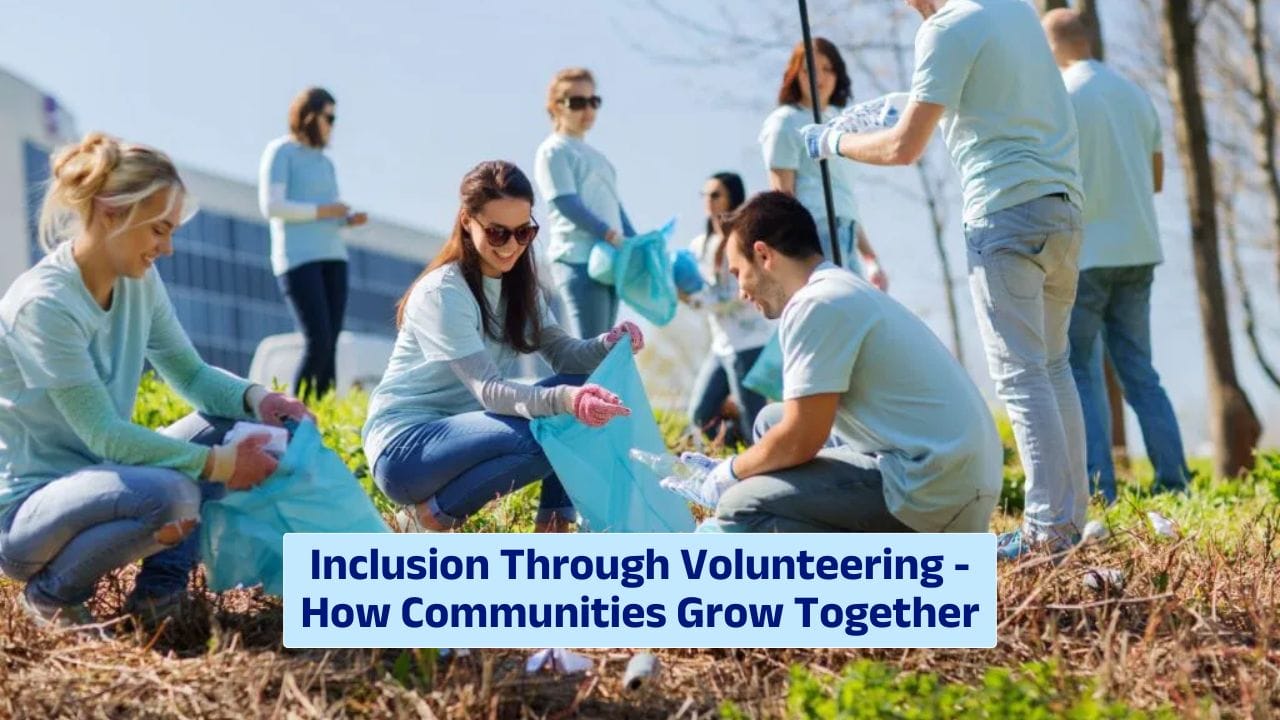
Volunteering isn’t just about lending a hand—it’s about opening a door. It creates spaces where people from all walks of life can come together, break down barriers, and truly connect.
In a world often divided by culture, race, ability, or economic status, volunteering has quietly become one of the most powerful tools for building inclusive and diverse communities. Let’s cut into how giving time can also mean giving people a voice, a place, and a purpose.
Meaning
At its heart, volunteering is simply the act of offering help without expecting anything in return. But in reality, it offers a lot—especially when it comes to inclusion. Whether it’s serving meals at a shelter, mentoring youth, or organizing a community garden, these shared efforts naturally bring people together.
And when people from different backgrounds collaborate, something amazing happens. Walls come down. Understanding grows. Prejudices shrink. It becomes less about differences and more about shared humanity.
Benefits
So, how exactly does volunteering promote inclusion? First, it creates shared goals. When you’re working alongside someone toward a common mission, labels fade. Suddenly, it doesn’t matter where someone’s from, what language they speak, or what challenges they face. You’re teammates.
Second, volunteering gives marginalized groups the chance to participate, lead, and contribute. For many, this can be empowering. It’s a way to feel seen, valued, and part of something bigger.
Here’s a snapshot of the key benefits of volunteering for inclusion:
| Benefit | Impact on Inclusion |
|---|---|
| Shared purpose | Builds connection beyond cultural barriers |
| Diverse roles | Gives everyone a way to contribute |
| Social interaction | Reduces isolation, especially for newcomers |
| Skill development | Empowers disadvantaged individuals |
| Community engagement | Strengthens the sense of belonging |
Access
Inclusion can’t happen without access. That means volunteer opportunities must be open to everyone—regardless of age, ability, education, or background. If volunteer programs only cater to certain groups, they can unintentionally reinforce exclusion.
Organizations need to think inclusively. Can someone in a wheelchair participate? What about someone who doesn’t speak the local language fluently? Are flexible hours offered for single parents or full-time workers? Creating diverse entry points ensures more people can get involved.
Diversity
Diversity isn’t just a buzzword—it’s a strength. When volunteer teams reflect the real makeup of a community, the impact grows. Different perspectives lead to creative problem-solving and richer conversations.
But it doesn’t happen by accident. Leaders must actively seek out diverse volunteers and create a welcoming environment. That might mean partnering with cultural organizations, offering training in multiple languages, or creating mentorship programs for first-time volunteers.
Belonging
Volunteering doesn’t just welcome people into a space—it helps them feel like they belong there. For immigrants, refugees, or anyone new to a community, volunteering can be their first real social connection. It’s a chance to practice language, understand local customs, and make friends.
And for long-time residents, volunteering with new neighbors can shift perspectives. It turns “them” into “us.” When people feel connected to their community, they’re more likely to give back, stay involved, and support others.
Youth
Young people, especially from underrepresented backgrounds, benefit hugely from inclusive volunteer programs. They learn skills, gain confidence, and see role models they can relate to.
Youth volunteering also creates the next generation of inclusive leaders. When kids grow up seeing diversity as normal and working across cultures as routine, they carry those values forward into adulthood. It plants seeds for long-term change.
Future
Inclusion isn’t a destination—it’s a process. And volunteering is one of the most natural ways to keep that process moving. As communities face new challenges—from migration to inequality to climate change—diverse and inclusive volunteer efforts will be more important than ever.
Every hour someone gives, every connection made, every voice heard—it all adds up. It builds bridges where there were walls, and communities where there were once only neighborhoods. And that’s how real change begins—one volunteer, one action, one inclusive moment at a time.
FAQs
How does volunteering support inclusion?
It brings diverse people together with a shared goal.
Can volunteering help immigrants feel welcome?
Yes, it helps them connect and feel part of the community.
Why is diversity in volunteering important?
It brings new ideas and reflects the real community.
Are there accessible volunteer roles?
Yes, many roles can be adapted for different abilities.
What age can youth start volunteering?
Many programs welcome teens from age 13 and up.