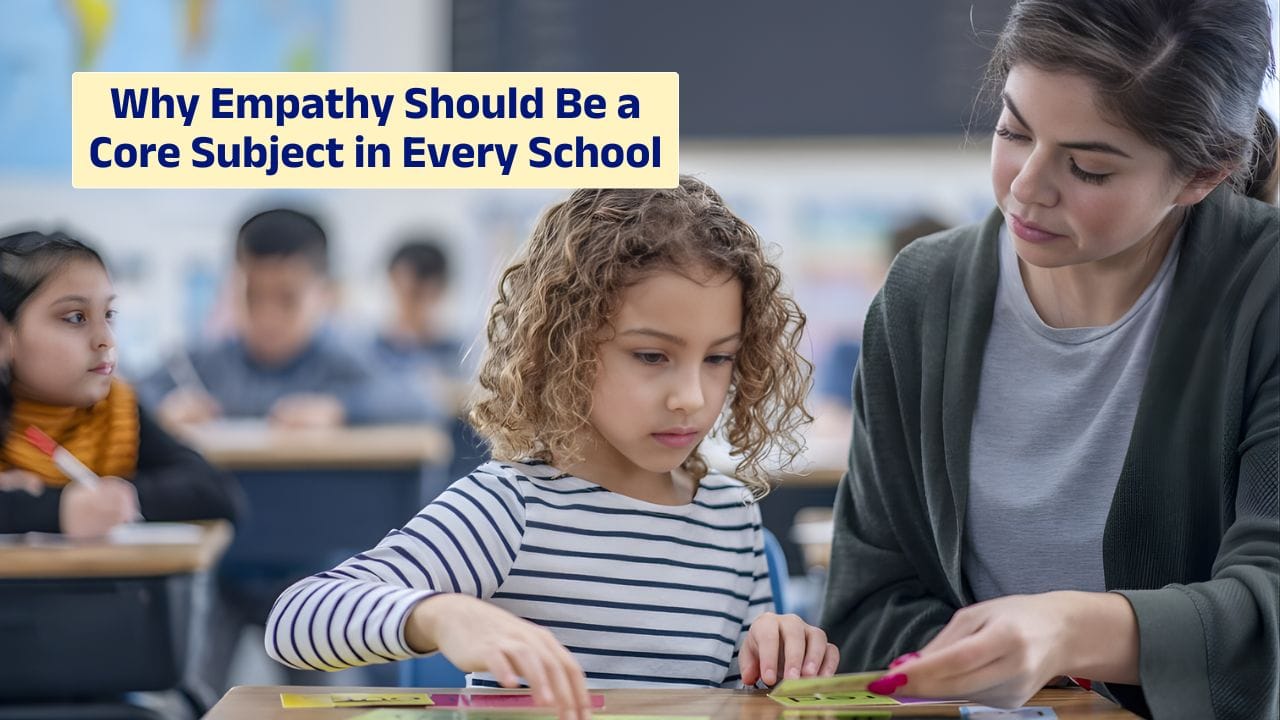
If there’s one subject that’s missing from most school curriculums, it’s empathy. We teach math, science, and history. We even offer coding and robotics. But rarely do schools make space for teaching kids how to understand, share, and respect the feelings of others. And let’s be honest—aren’t those the skills we need the most in today’s world?
Empathy is the glue that holds relationships, communities, and even nations together. Without it, we see more bullying, more conflict, and less cooperation. So, what if we treated empathy like any other subject? What if we taught it in classrooms, practiced it like a language, and graded it not by tests, but by kindness and connection?
Let’s look into why empathy matters and how schools can start building it into everyday learning.
Knowing
First things first—what is empathy? Simply put, it’s the ability to understand and feel what someone else is going through. It’s putting yourself in their shoes, emotionally and mentally.
But empathy isn’t just about being “nice.” It’s about being aware. It’s what stops a kid from laughing when a classmate trips. It’s what encourages students to include the quiet kid at lunch. And it’s what helps future adults become better teammates, leaders, and friends.
Empathy is both emotional intelligence and social skill rolled into one. And like any skill, it can be taught and practiced.
Neglect
So, why don’t schools prioritize it? One word: academics.
With so much pressure on grades, test scores, and college admissions, there’s barely time for anything else. Soft skills like empathy get pushed aside. Yet, studies show that emotional intelligence directly impacts academic performance. Kids who feel safe, understood, and supported simply learn better.
In other words, empathy isn’t a distraction from learning. It fuels it.
Behavior
Empathy also plays a huge role in behavior. Think about how many school problems—bullying, exclusion, arguments—could be prevented if kids learned to pause and consider how their actions affect others.

Teaching empathy reduces conflict and boosts cooperation. It encourages students to listen instead of lash out, to speak up for someone else, and to resolve disagreements peacefully. That makes for a healthier school environment for everyone—teachers included.
Practice
You can’t just lecture students on empathy. It’s not a “read and memorize” type of subject. It needs to be felt, discussed, and lived.
Here are some ways schools can teach empathy in real time:
| Activity Type | Example in Class |
|---|---|
| Role-playing | Acting out scenarios involving emotions |
| Storytelling | Reading books with diverse perspectives |
| Reflection | Journaling about feelings and experiences |
| Group Work | Encouraging collaboration and dialogue |
| Volunteering | Organizing service-based school projects |
These activities help students not only understand their own emotions, but also recognize and respect the feelings of others.
Teachers
Teachers are the front line of empathy education. When a teacher models compassion, patience, and respect, students notice. In fact, some of the most unforgettable lessons from school come not from textbooks, but from how a teacher made a student feel.

That’s why educators need empathy training too. Supporting teachers in emotional intelligence helps them manage classrooms more effectively and respond to students’ needs more humanely.
Technology
With digital learning on the rise, teaching empathy has become even more important. Screens make it easy to hide behind usernames, ignore real emotions, or say things we wouldn’t say face-to-face.
Schools must teach digital empathy too—how to be kind online, how to read emotional cues in digital spaces, and how to stand up against cyberbullying.
It’s not enough to teach kids how to use technology; we need to teach them how to be humane with it.
Future
The world doesn’t just need smarter people—it needs kinder ones. And the classroom is the perfect place to start.
Imagine if empathy were graded like math. Not with numbers, but through acts of kindness, collaboration, and emotional awareness. Imagine a world where success isn’t just measured by test scores, but also by how well we treat others.
That’s not just idealism—it’s a real possibility. But only if we make space for empathy in our schools.
FAQs
What is empathy in simple terms?
Empathy means understanding and sharing someone else’s feelings.
Why teach empathy in schools?
It helps reduce bullying, improve relationships, and boost learning.
How can empathy be taught?
Through role-play, storytelling, reflection, and group activities.
Does empathy improve school behavior?
Yes, it encourages kindness, cooperation, and reduces conflict.
Can teachers learn empathy too?
Absolutely. Empathy training helps teachers support students better.