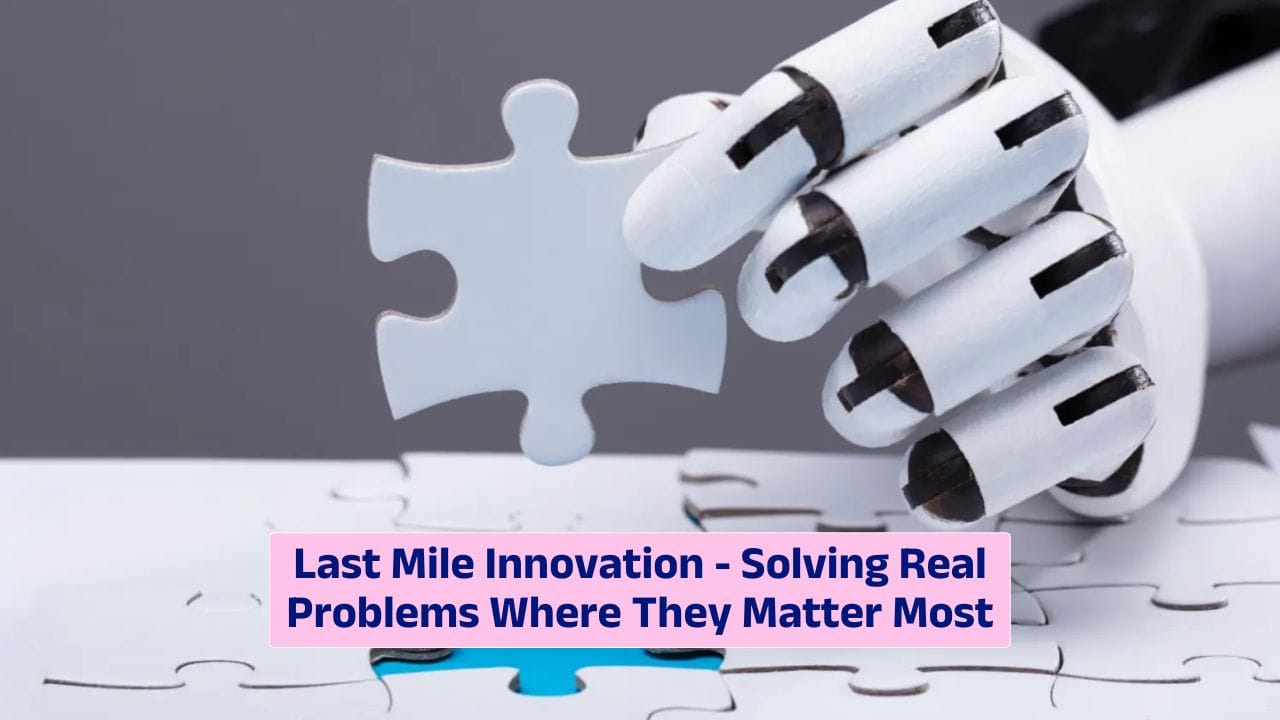
When we talk about innovation, we often imagine cutting-edge labs, big tech campuses, or high-speed cities. But real impact happens far away from all that — at the last mile. This is the stretch where services actually reach people. It’s rural villages, remote towns, and underserved communities.
These are places where even the best solutions can fail if they don’t work on the ground. That’s why last mile innovation matters. It’s about making sure ideas don’t just exist — they deliver, where people need them the most. Let’s break down how it’s changing lives.
Meaning
So, what exactly is the “last mile”? Originally, it was a telecom term — the final leg of the network that delivers services to end users. But now, it’s a broader concept. It means the gap between big ideas and real people. You can invent the best healthcare tool, but if it can’t reach a rural clinic, it’s just theory. That last stretch is often the hardest, most overlooked part — but it’s also where the real magic happens.
Challenges
The last mile isn’t just about geography. Sure, it might mean rough roads or far-off villages. But it also includes poor infrastructure, lack of digital access, weak supply chains, and cultural barriers. Innovating in these areas takes more than just good intentions — it takes understanding, patience, and local knowledge.
Here’s the tricky part: one solution doesn’t fit all. What works in one place might fail in another. That’s why successful last mile innovation is usually hyper-local and people-focused.

Health
One of the biggest areas where last mile innovation is saving lives is healthcare. In many parts of the world, basic medical services are still out of reach. But creative solutions are bridging the gap.
Take portable diagnostic kits that can detect diseases without needing a full lab. Or drone delivery systems that send vaccines or blood samples to remote locations. Then there are mobile clinics that travel to where people are — instead of the other way around.
These aren’t flashy technologies. They’re simple, smart, and designed for tough conditions.
Finance
Another game-changer at the last mile is financial inclusion. Millions of people are still unbanked — they don’t have access to traditional banking. But with mobile money platforms like M-Pesa in Kenya, users can send, receive, and save money with just a phone.
Fintech startups are also designing loan services, insurance, and credit scoring systems for people with no formal income or paperwork. It’s opening doors for small business owners, farmers, and families who’ve long been excluded from financial systems.

Energy
Energy is a major barrier to development in many last mile regions. But decentralized solutions are changing that too. Think solar microgrids, pay-as-you-go solar kits, and clean cooking stoves that work without electricity.
These innovations don’t just power homes — they power opportunity. Kids can study after dark, families can cook safely, and small shops can keep food cold or machines running. It’s about more than convenience — it’s dignity and potential.
Education
Online learning has grown massively, but it still leaves many behind. Last mile innovations are finding creative ways to reach learners everywhere.
Radio-based lessons, solar-powered tablets, and offline learning apps are making education possible even without the internet. Organizations are also training local educators to deliver digital content in native languages.
When tech meets people where they are, learning becomes possible anywhere.

Local
The most successful last mile solutions are built with local communities, not just for them. That means involving local leaders, hiring community members, and designing with cultural relevance in mind.
A good example is using local delivery riders for medical supply chains or community health workers with mobile tools to track diseases. These approaches respect local knowledge and build trust, which is essential for lasting change.
Future
The future of last mile innovation looks promising. With AI, big data, and satellite technology, we can now identify needs faster and design better-targeted solutions. But the heart of it will still be local — listening, adapting, and staying close to the ground.
Big ideas are great. But unless they work at the last mile, they don’t really work at all. That’s where the change is felt. That’s where problems meet solutions. And that’s where innovation truly matters.
FAQs
What is last mile innovation?
It’s innovation designed to reach underserved and remote communities.
Why is last mile delivery hard?
It faces issues like poor infrastructure, cost, and access barriers.
How does tech help rural healthcare?
Tools like mobile clinics and drones deliver services to remote areas.
Can solar power support remote areas?
Yes, solar microgrids and kits provide clean, affordable energy.
What’s key to success at the last mile?
Local involvement, adaptable solutions, and understanding real needs.