India is standing at a turning point. With the largest population of young people in the world, the country’s future lies in the hands of its youth. By 2040, India aims to become a fully developed nation, and the driving force behind this ambition isn’t just policy or technology—it’s the energy, innovation, and vision of young Indians.
But what exactly will a youth-led developed India look like? Let’s look into how this generation is crafting a new future.
Demographics
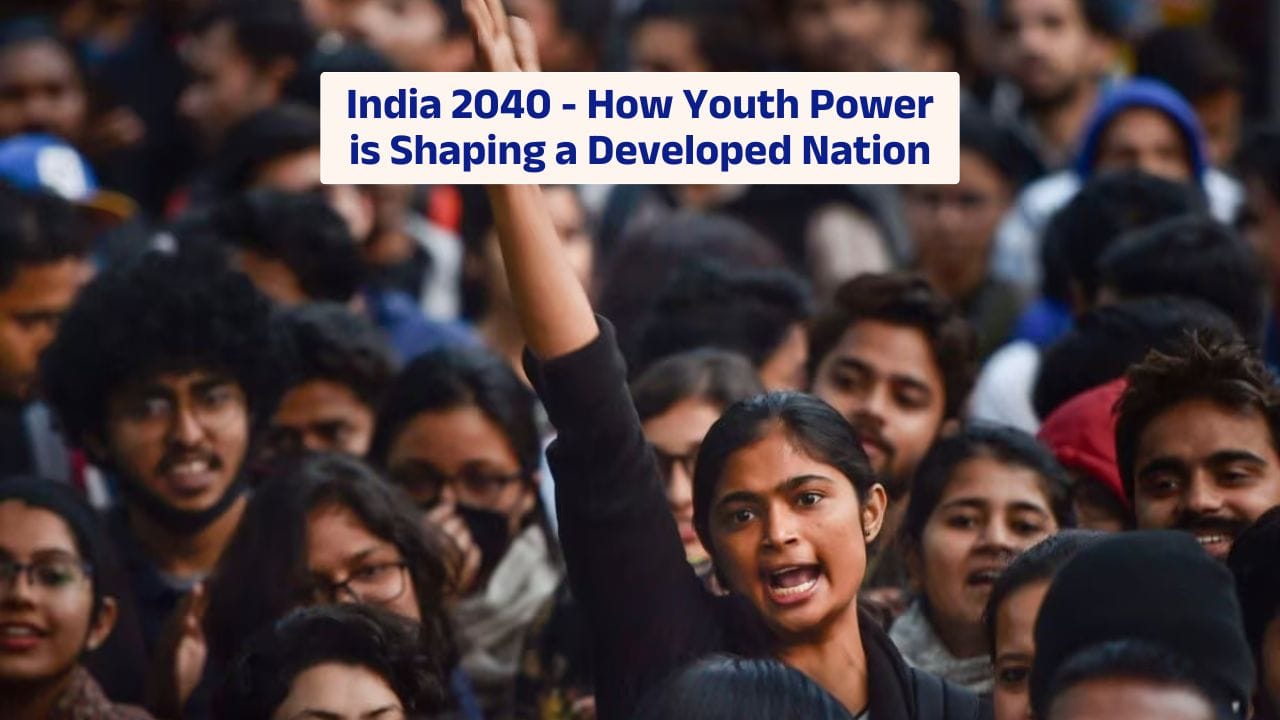
India’s demographic advantage is no secret. Over 50% of its population is under the age of 30. This means the country is full of students, creators, entrepreneurs, coders, artists, and changemakers. With such a young and dynamic workforce, India has the potential to become a global superpower by 2040—if it can channel that energy effectively.
Here’s a quick breakdown of the youth population:
| Age Group | Population (Est. 2025) | Role in 2040 |
|---|---|---|
| 15-24 | 240 million | Workforce, Entrepreneurs |
| 25-34 | 210 million | Leaders, Professionals |
| Under 15 | 280 million | Future Students |
This group will shape the social, economic, and political structures of the country in the coming years.

Innovation
The startup boom in India isn’t just a trend—it’s a movement. From fintech to edtech, young entrepreneurs are solving real-world problems with creative solutions. Platforms like UPI, Zerodha, and Byju’s were either founded or built by young innovators. By 2040, we can expect a stronger startup ecosystem where unicorns aren’t rare—they’re the norm.
Young minds are also contributing to global challenges like climate change, food security, and healthcare through innovation. Think of affordable electric vehicles, drone-based farming, or AI-driven diagnostics. Indian youth are not just participants in innovation—they’re leading it.
Education
For India to be truly developed, education has to move beyond textbooks. And it already is. Today’s youth are demanding more practical, skill-based, and digital education. Coding is being taught in schools, online courses are bridging skill gaps, and platforms like YouTube and Coursera are empowering self-learners.
By 2040, traditional classrooms may give way to virtual reality learning, AI-powered teaching assistants, and personalized education paths. And the best part? The students driving this change will also be the teachers, developers, and reformers of tomorrow.
Employment
A developed India must provide meaningful jobs. With automation replacing many traditional roles, the youth are not just looking for jobs—they’re creating them. Freelancing, gig work, and remote working are becoming mainstream.

We’re already seeing a shift from job-seeking to job-creating. By 2040, India could have millions of youth-led micro-enterprises, startups, and global freelancing professionals. But this needs strong policies, digital infrastructure, and startup-friendly regulations.
Governance
Today’s youth aren’t just politically aware—they’re politically active. Social media, youth parliaments, and civil activism are giving them a voice like never before. They want transparency, inclusiveness, and accountability in governance.
By 2040, we could see a significant rise in youth representatives in politics, local governance, and public service. Imagine a country where 30-year-olds are state ministers and district collectors. That’s not a dream anymore—it’s a growing reality.
Sustainability
Climate change is one of the biggest concerns for Gen Z and Millennials. They’re planting trees, protesting deforestation, avoiding plastic, and choosing sustainable brands. This eco-conscious mindset is laying the foundation for a greener India.
By 2040, sustainability might be a default lifestyle choice. Expect solar-powered homes, electric public transport, zero-waste policies, and cities built around eco-design principles—all led by youth movements and green startups.

Technology
India’s youth are not just consuming technology—they’re creating it. With easy access to the internet and coding tools, kids as young as 12 are building apps and games. The rise of AI, blockchain, and quantum computing will offer new playgrounds for innovation.
By 2040, we could see Indian youth leading the charge in space tech, biotech, robotics, and virtual reality. The digital divide is narrowing, and with the rollout of 5G and satellite internet, even rural youth are joining the tech revolution.
Mindset
Perhaps the biggest transformation is mindset. The youth of today are ambitious, curious, and fearless. They’re no longer settling for “safe” careers—they’re chasing passion and purpose. They care about mental health, gender equality, and global issues. They think big, move fast, and learn constantly.
This mindset shift will be India’s secret weapon. It’s what will turn vision into reality, and ideas into impact.
As 2040 approaches, it’s clear that India’s development journey won’t just be about GDP or infrastructure. It’ll be about people—specifically, young people. They are the dreamers, the doers, and the disruptors who will carry the nation forward. With the right support and opportunities, India’s youth can truly transform the country into a developed, inclusive, and thriving society.
FAQs
What will India’s youth population be in 2040?
India will still have a large young population driving growth.
How are youth impacting governance?
They’re engaging more in politics and demanding accountability.
Will startups drive India’s future economy?
Yes, youth-led startups will fuel innovation and employment.
Is education changing in India?
Yes, it’s shifting toward digital and skill-based learning.
Are Indian youth climate-conscious?
Yes, they are leading eco-friendly and green initiatives.