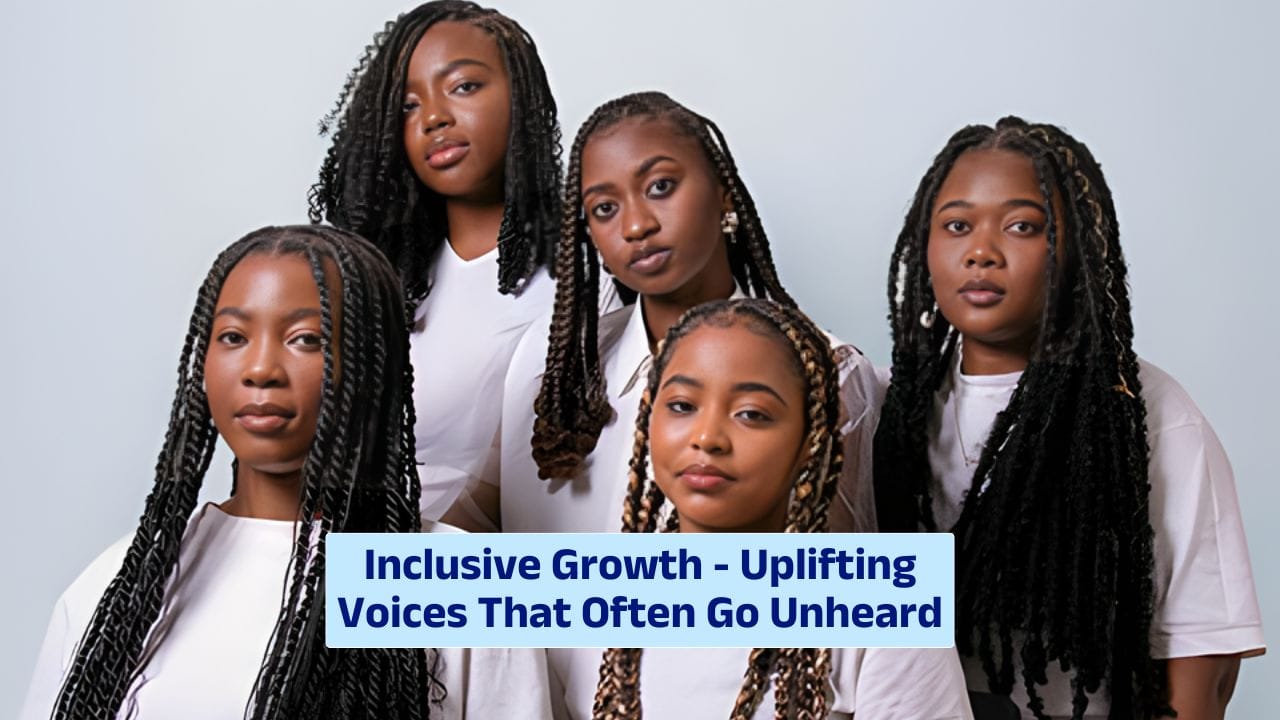
Growth that leaves people behind isn’t real progress. For development to be truly meaningful, it must include everyone—especially those who’ve been pushed to the sidelines. Inclusive growth is all about making sure that every individual, regardless of their background, identity, or status, has a fair shot at opportunity, stability, and dignity. And that starts by giving voice to the marginalized.
Meaning
Inclusive growth means more than just economic expansion. It’s about making sure the benefits of that growth reach every layer of society. It’s not enough for a country’s economy to thrive while large segments of its population remain stuck in poverty, excluded from decision-making, or denied basic services.
This approach focuses on removing barriers that prevent participation. It’s about equity, not just equality. Everyone starts from different places, so inclusive growth works to level the playing field.
Who
When we say “marginalized,” who are we talking about? These are groups who have historically been excluded or disadvantaged due to social, economic, or political reasons. Here are just a few:
| Group | Common Challenges Faced |
|---|---|
| Women and girls | Gender bias, lack of education, pay gaps |
| People with disabilities | Inaccessibility, stigma, limited opportunities |
| Ethnic minorities | Discrimination, language barriers, isolation |
| LGBTQ+ communities | Legal barriers, violence, lack of protections |
| Rural populations | Poor infrastructure, limited job access |
These communities often face multiple, overlapping forms of exclusion. Addressing their needs isn’t optional—it’s essential.
Barriers
The road to inclusive growth is blocked by both visible and invisible barriers. These include:
- Limited access to quality education and healthcare
- Discrimination in hiring or service delivery
- Legal systems that exclude certain identities
- Unequal distribution of resources and infrastructure
- Cultural norms that reinforce exclusion
If we want growth to be inclusive, we have to break down these walls—not just for a few, but for everyone.
Solutions
So how do we make growth truly inclusive? It takes more than good intentions. It takes policies, participation, and accountability.
- Inclusive education: Ensuring schools are accessible and supportive to all
- Community participation: Giving marginalized voices a seat at the table
- Equity-focused policies: Budgeting and planning with inclusion in mind
- Targeted job creation: Training and employment for underserved groups
- Legal reforms: Protecting rights and removing discriminatory laws
When systems adapt to include everyone, everyone thrives.
Benefits
Inclusive growth isn’t just morally right—it’s economically smart. Studies show that diversity and inclusion drive innovation, productivity, and resilience. When more people contribute, more value is created.

Here’s how inclusion pays off:
| Area | Positive Outcomes |
|---|---|
| Economy | Increased productivity, broader tax base |
| Society | Lower crime, better public health, stronger trust |
| Politics | Greater stability, more representative leadership |
A society that uplifts its most vulnerable members becomes stronger, fairer, and more united.
Voice
True inclusion means listening—not just talking about change, but involving those affected in making it. That means creating platforms for marginalized people to share their stories, shape policies, and lead initiatives.
From youth-led climate movements to indigenous land rights campaigns, the most powerful voices are often the ones that were once silenced. Inclusive growth amplifies those voices and turns them into engines of progress.
Future
The future depends on how inclusive we are today. We can’t afford to move forward while dragging inequality behind us. The good news? Inclusive growth is possible. But it takes willpower, awareness, and consistent action.

It’s not about giving handouts. It’s about creating systems where everyone has a fair chance to contribute and succeed. When we invest in those left behind, we don’t just lift them—we lift everyone.
Because growth that’s shared is growth that lasts.
FAQs
What is inclusive growth?
It’s growth that benefits all members of society equally.
Who are considered marginalized groups?
Groups excluded due to gender, location, race, or disability.
Why does inclusion matter for development?
It ensures fair access to opportunities and resources.
How can governments promote inclusion?
Through equitable policies and community engagement.
Does inclusive growth help the economy?
Yes, it boosts productivity and reduces inequality.