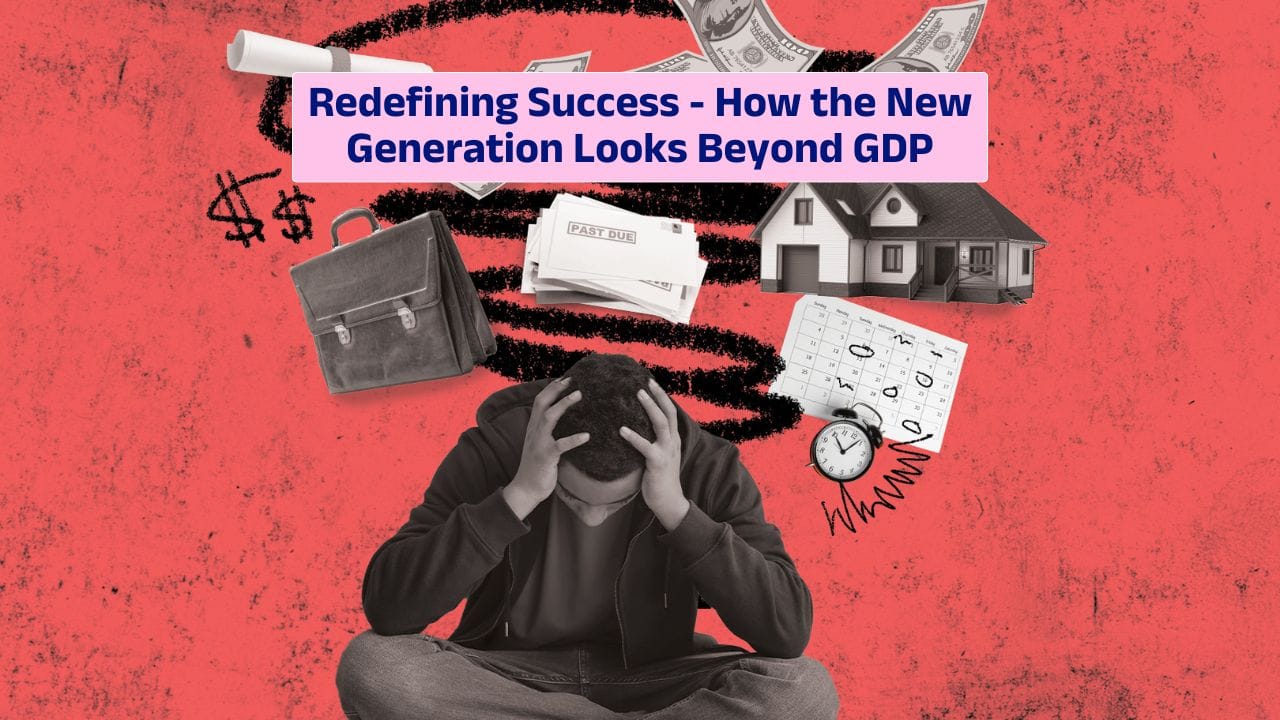
For decades, we’ve measured a country’s success by one number—GDP. The Gross Domestic Product tells us how much a nation produces in goods and services, but does it really capture how people are doing? Not quite.
The new generation isn’t buying into that old definition of success. They want more than just economic growth—they want happiness, sustainability, fairness, and purpose. This shift is reshaping how we think about progress, and it’s pushing governments, businesses, and societies to rethink what truly matters.
Meaning
GDP is all about money—how much a country earns and spends. But it doesn’t show if people are happy, healthy, or fulfilled. Redefining success means looking at well-being, environmental health, social equality, and more. It’s about asking better questions: Are people thriving? Do they have access to clean air, good education, and mental health care? Can they find meaning in their work and lives?
Generation
Young people today are driving this change. They’ve grown up in a world where climate change, mental health crises, and inequality are impossible to ignore. For them, success isn’t just about owning a big house or having a high-paying job.
It’s about making an impact, living with balance, and being part of a community. They value ethical consumption, mental well-being, and social justice just as much as financial security—sometimes more.

Indicators
To reflect this broader definition of success, new measurements are emerging. These include:
| Indicator | What It Measures |
|---|---|
| Happiness Index | Life satisfaction and emotional health |
| Human Development Index | Education, life expectancy, income |
| Social Progress Index | Basic needs, opportunity, and rights |
| Green GDP | Environmental costs of growth |
| Well-being Economy | Holistic measures of national progress |
These indicators offer a more complete picture of how well a society is really doing.
Work
The new generation is also redefining success at work. They care less about climbing the corporate ladder and more about meaningful careers. Flexibility, purpose, and a healthy work-life balance matter more than job titles or fancy offices.
Many are turning to entrepreneurship, freelancing, or social impact careers instead of traditional 9-to-5 jobs. For them, success isn’t about fitting into the system—it’s about designing one that works for their values.
Consumption
Success used to mean having more—more clothes, more gadgets, more status. But now, minimalism and sustainability are on the rise. Young people are ditching fast fashion, supporting ethical brands, and making choices that align with their principles. It’s not just about spending money—it’s about spending it wisely, with purpose.
Mentality
This shift in mindset is also personal. Instead of comparing themselves to others or chasing external validation, the new generation is focusing inward. Mental health, emotional intelligence, and mindfulness are becoming priorities. They’re redefining success as personal growth, emotional resilience, and self-awareness—not just achievements you can put on a résumé.
Policy
Governments are starting to catch on. Countries like New Zealand and Bhutan are already using well-being budgets or happiness indexes to guide policy. This means investing in mental health services, climate action, and community programs rather than just boosting GDP. When leaders focus on what truly improves lives, policies become more human-centered and forward-thinking.
Future
Looking ahead, the idea of success will only keep evolving. The empowered generation will demand systems that value people and the planet, not just profit. Whether it’s through voting, creating businesses, or raising their voices on social media, they’re pushing for a world where progress means more than just economic stats. And that’s a change worth celebrating.
In the end, this generation is showing us that success isn’t about how much we make, but how much we matter—to ourselves, each other, and the world we share. By redefining success beyond GDP, they’re rewriting the rules of what it means to truly thrive.
FAQs
What does ‘beyond GDP’ mean?
It means measuring success with more than just economic growth.
Why are young people redefining success?
They value well-being, equality, and purpose over wealth alone.
What are alternatives to GDP?
Indexes like HDI, Happiness Index, and Green GDP.
How is work success changing?
It’s now about meaning, balance, and flexibility.
Do governments use well-being measures?
Yes, countries like Bhutan and New Zealand do.