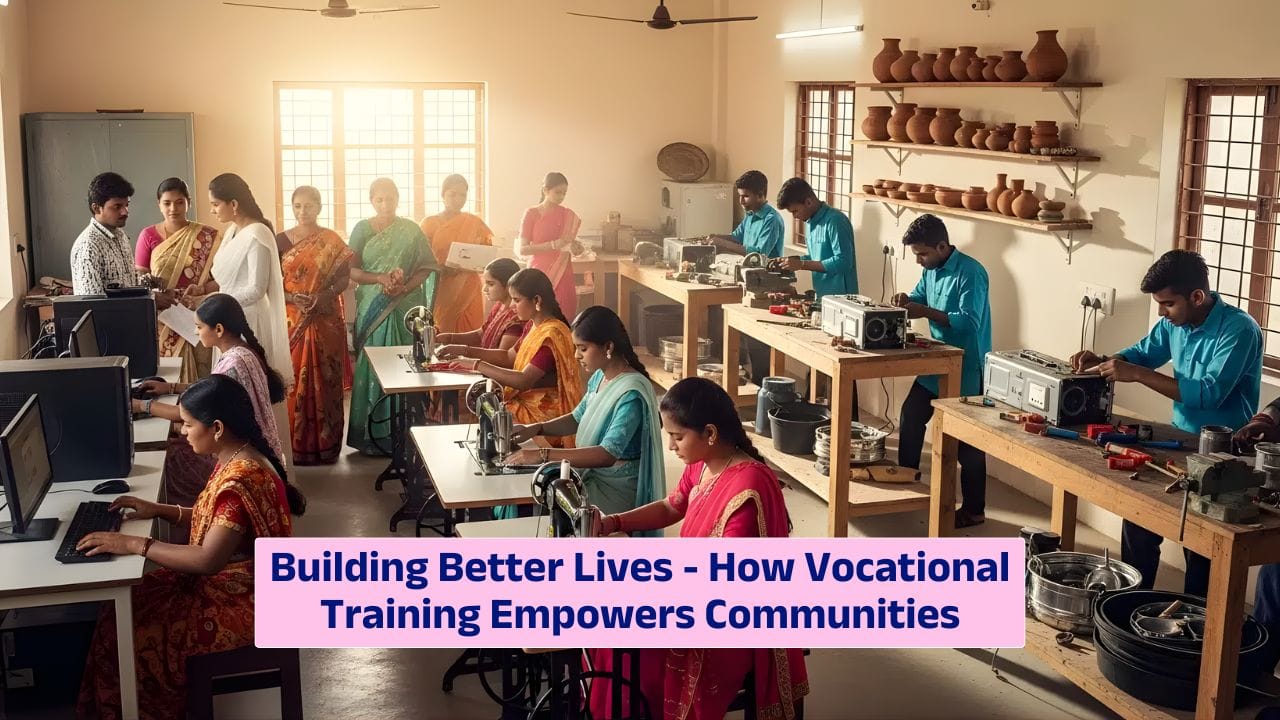
When we talk about change, we often think of big policy shifts or massive donations. But sometimes, the most powerful change comes from teaching someone a skill they can use to earn a living. That’s where vocational training comes in.
It’s not just about learning how to do a job — it’s about building confidence, independence, and opportunity. Across the globe, vocational skills are helping people transform their lives, support their families, and uplift entire communities.
Meaning
Vocational training refers to hands-on, practical education that prepares individuals for specific trades or careers. Unlike traditional academic paths, vocational programs focus on skills like carpentry, plumbing, electrical work, tailoring, beauty services, coding, agriculture, or hospitality.
The goal is simple — give people the tools to work and succeed in their local economy. Whether it’s a single mother learning to sew or a young man becoming a certified mechanic, vocational training is often the fastest path to income and self-reliance.
Importance
Why is this so impactful? Because skills equal survival, especially in underserved or developing areas. For communities with limited access to higher education or formal employment, vocational training provides a lifeline.

Here’s what makes it so essential:
- Bridges the gap between education and employment
- Empowers individuals with income-generating skills
- Reduces unemployment and underemployment
- Promotes self-employment and entrepreneurship
- Strengthens local economies from the ground up
Instead of waiting for a job to appear, people create their own opportunities. And when individuals thrive, so do the communities around them.
Programs
Vocational training programs come in all shapes and sizes — from government-funded centers to grassroots workshops led by NGOs. Some last a few weeks, others take a year or more.
Here’s a quick look at the kinds of programs making a difference:
| Program Type | Common Skills Taught | Duration |
|---|---|---|
| Technical Institutes | Mechanics, welding, construction | 6–24 months |
| NGO-led Workshops | Sewing, crafts, farming | 2–12 weeks |
| Online Training | Coding, design, freelancing | Flexible |
| Apprenticeships | Carpentry, plumbing, electrical | 6–12 months |
| Youth Development Centers | Hospitality, IT, sales | 3–12 months |
These programs often include soft skills too — things like communication, teamwork, and financial literacy, which are crucial for long-term success.

Impact
Vocational training doesn’t just teach people how to work — it changes how they see themselves. Many trainees go from feeling hopeless to empowered. They start small businesses, support their families, and even become trainers themselves.
For example, in many African and South Asian communities, women who complete tailoring or hairdressing programs go on to open small salons or co-ops. In rural areas, farming and mechanical skills help people become more self-sufficient and reduce dependency on aid.
The ripple effect is real:
- One trained person can lift an entire family out of poverty
- Skilled workers create jobs by starting businesses
- Local economies grow when goods and services stay in the community
Challenges
Of course, there are challenges. Many people can’t afford even low-cost programs. Others face barriers like gender bias, lack of internet access, or outdated training models.
But progress is happening. More governments are investing in vocational education. NGOs are offering mobile training programs that reach remote villages. And online platforms are making learning more accessible than ever.

The key is scaling these solutions while adapting them to local needs. After all, a welding course won’t help much in a community that really needs digital skills or agricultural techniques.
Vocational training is more than a stepping stone — it’s a foundation. When people gain real-world skills, they unlock their potential and break cycles of poverty. And when communities invest in skills, they invest in long-term change.
No matter where you live, what language you speak, or how much you’ve studied, you can learn something valuable. And that one skill might just be the spark that changes everything.
FAQs
What is vocational training?
It teaches practical job skills like trades or services.
Who benefits from it most?
Youth, women, and people with limited job options.
Can it reduce poverty?
Yes, it helps people earn and support their families.
Are there online training options?
Yes, many platforms offer free or low-cost courses.
How long do programs usually last?
Anywhere from a few weeks to two years.