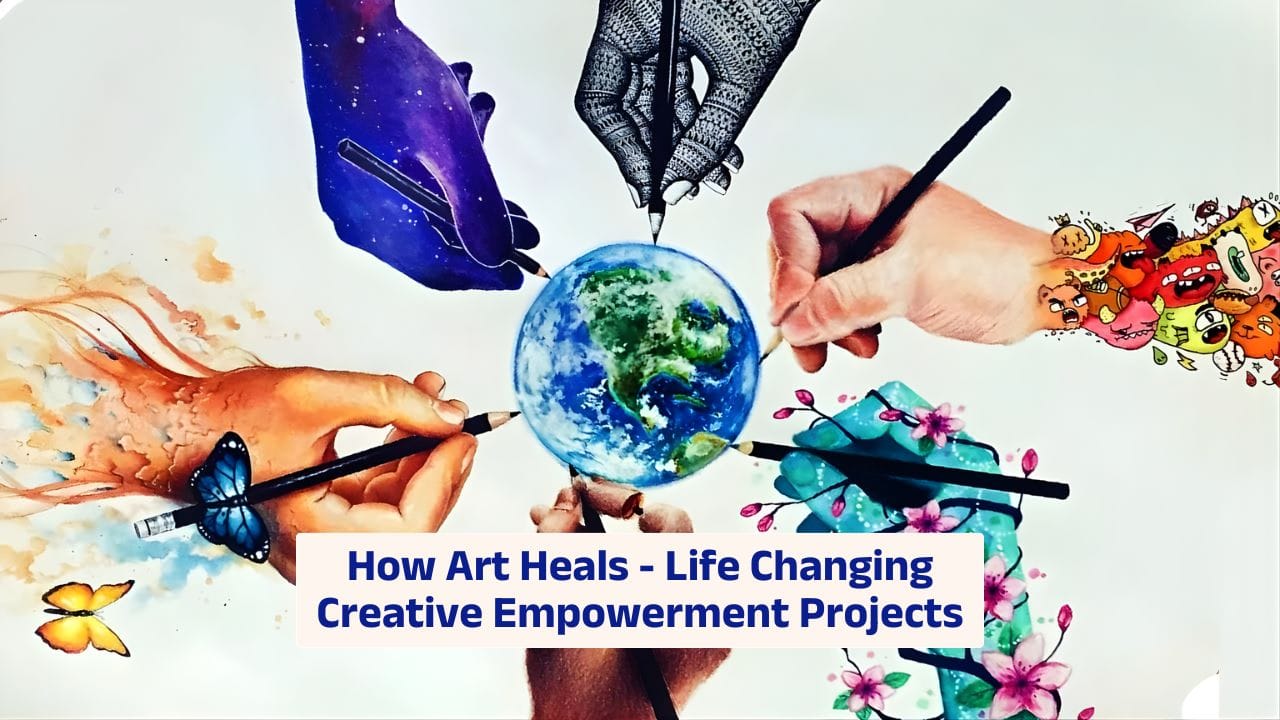
Art has always been more than paint on a canvas. It speaks when words fail. It heals what medicine can’t. For people dealing with trauma, grief, or even everyday stress, art offers an escape, a way to express and empower. Across the world, creative empowerment projects are transforming lives—giving individuals the tools to rediscover themselves through creativity. So how exactly does art heal? Let’s cut in.
Healing
Art taps into something primal. Whether it’s painting, dancing, writing, or music, it allows people to explore emotions they might not be able to articulate. That’s where healing begins.
Many hospitals, rehab centers, and therapy clinics now use art therapy to treat patients with depression, PTSD, anxiety, or chronic illness. Studies show that just 45 minutes of creative activity can reduce cortisol—the stress hormone—and boost mood. Art doesn’t fix the problem, but it gives people a way to process pain, cope, and feel in control.
It’s not just clinical settings either. From urban youth centers to prisons, art programs are proving to be powerful tools for healing.
Empowerment
Creative projects give people more than an outlet—they offer power. When someone paints their first picture, writes a poem, or performs on stage, they feel seen. They realize their voice matters.
Think about someone in recovery from addiction. A community mural project can become more than just an activity—it can be a declaration of hope. Or take a young woman escaping domestic violence. Writing her story through poetry helps reclaim her voice.
These projects often involve collaboration, building trust and community in the process. They spark confidence, especially in people who’ve been silenced or marginalized.
Projects
So, what do these creative empowerment projects look like in action? Here are a few powerful examples:
| Project Name | Location | Focus | Outcome |
|---|---|---|---|
| The Red Dress Project | Global | Textile & Storytelling | Amplifies women’s voices worldwide |
| ProjectArt | United States | Youth Visual Arts | Free art education for underserved kids |
| InsideOut Project | Global | Photography & Identity | Builds global connection through portraits |
| ArtLifting | United States | Homeless Artists | Helps artists earn income and visibility |
| Studio Upstairs | United Kingdom | Mental Health & Art | Studio spaces for people in recovery |
Each one uses a different medium—textile, painting, photography—but the mission is the same: empower through expression.
Recovery
Art is a key part of many recovery journeys. For people overcoming addiction, abuse, war, or mental illness, the road to healing is long and lonely. But putting brush to canvas or words to paper gives that journey shape.

In fact, many veterans who’ve experienced trauma report that painting or sculpting helps them process flashbacks better than talk therapy. It’s about creating meaning out of chaos. And for some, that meaning becomes a message of hope for others.
Expression
We all crave connection. But not everyone can say what they feel. That’s where art steps in. It’s a language of its own, and it’s incredibly powerful.
In places like refugee camps, young kids often can’t describe what they’ve gone through. But hand them some crayons, and they’ll tell you everything through their drawings. That visual expression becomes a first step toward emotional release and healing.
And it’s not just about sadness. Art also celebrates joy, identity, and dreams. It’s both a mirror and a megaphone.
Change
These creative projects don’t just change individuals—they shift communities. When people feel heard and supported, they start contributing. A mural can turn a rundown street into a symbol of pride. A poetry night can bring neighbors together.
Art encourages dialogue. It softens barriers of race, class, and language. Over time, these small shifts create bigger social change.
Across continents, art is doing what politics often can’t—it’s bringing people together, healing wounds, and inspiring action.
Art may not be a cure, but it’s definitely a catalyst. From broken hearts to broken systems, creativity is proving to be a lifeline. These empowerment projects remind us that when people are given the tools to create, they’re also given the power to change.
FAQs
How does art help mental health?
It reduces stress, improves mood, and helps process trauma.
What is an art empowerment project?
A project using art to give people confidence and a voice.
Who benefits from creative therapy?
Anyone facing trauma, stress, illness, or emotional challenges.
Can art change communities?
Yes, it builds pride, connection, and inspires social change.
Is talent needed for art therapy?
Nope! It’s about expression, not skill.