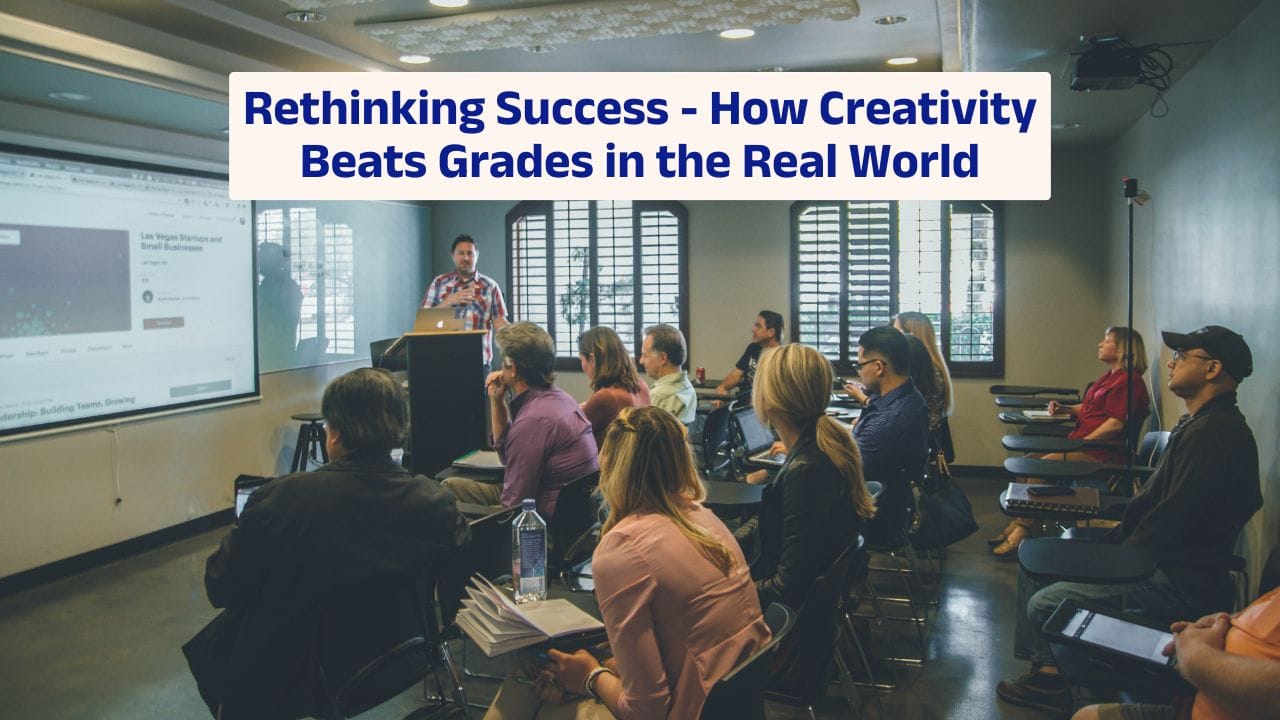
When we think about success, the first image that comes to mind is often a report card full of A’s. For decades, society has linked academic achievement to intelligence and future success. But here’s the twist — in the real world, it’s often the creative thinkers, the innovators, and the problem-solvers who rise to the top, not just the top scorers in school.
So, is it time we shift the way we define success? Let’s look into why creativity might just matter more than grades.
Mindset
Grades often reward memorization, repetition, and test-taking skills. While these have their place, they don’t always reflect a student’s true potential. Creativity, on the other hand, requires curiosity, courage, and the willingness to think differently.
A creative mindset pushes boundaries. It doesn’t settle for the usual. Where grades say, “follow the rules,” creativity says, “let’s make new ones.” This kind of thinking fuels innovation — something every industry needs more of.
Reality
Take a moment to think about the world’s most successful entrepreneurs, artists, inventors, and leaders. Were they always top of their class? Not really. Many of them were average students or even school dropouts. But they had a vision. They had ideas others couldn’t see. They took risks.

For example, Steve Jobs dropped out of college. Albert Einstein wasn’t considered a “star student.” Yet, they changed the world. What they had wasn’t perfect grades — it was imagination, passion, and the guts to try something new.
Workplace
In today’s job market, employers don’t just want people who can follow instructions. They want problem solvers. People who can think on their feet, adapt quickly, and offer fresh ideas. Creativity is a top skill that companies look for, especially in fast-changing industries like tech, media, and marketing.
Grades may open the door to an interview. But it’s creativity and critical thinking that get you hired — and promoted.
Skills
Here’s a breakdown of how creativity stacks up against grades when it comes to real-life value:
| Factor | Grades Focus On | Creativity Focus On |
|---|---|---|
| Learning Style | Memorization | Exploration |
| Risk Taking | Avoids mistakes | Embraces failure |
| Outcome | High scores | Original results |
| Motivation | External (rewards) | Internal (passion) |
| Application | Academic knowledge | Real-world problem solving |
Clearly, creativity builds skills that go far beyond the classroom.

Schools
The traditional education system has long prioritized standardized testing and GPA scores. Unfortunately, this often sidelines students with creative talents. Not everyone learns the same way — and not everyone shines through grades.
Some of the most brilliant minds don’t fit the academic mold. They learn by doing, experimenting, and expressing — not by filling in the correct bubble on a test sheet.
That’s why more schools are now introducing project-based learning, arts programs, and critical thinking exercises to help students flex their creative muscles.
Balance
Now, let’s be real — grades still matter to a degree. They show dedication and discipline. But they shouldn’t be the only measurement of success. A balanced approach that values both academic performance and creative growth can unlock a student’s full potential.
Parents, teachers, and students themselves should aim to nurture creativity alongside hard work. It’s not an either-or game — it’s about expanding the definition of success.
Future
In a world shaped by constant change, automation, and innovation, the ability to think differently is more valuable than ever. Robots can follow rules. AI can process data. But creativity? That’s still a uniquely human skill.
Whether you’re launching a startup, designing a new app, or finding solutions to global problems, creativity is the secret sauce. And those who embrace it are the ones who will shape the future.
Success is no longer just about climbing a grade-based ladder. It’s about building your own ladder — one that reflects your ideas, your passions, and your purpose.
At the end of the day, creativity is what makes your work stand out, your thoughts heard, and your path unique. And that, more than any report card, is what defines true success.
FAQs
Is creativity more important than grades?
Yes, especially for real-world problem solving and innovation.
Can you succeed with poor grades?
Absolutely. Many successful people were average students.
Do employers care more about skills or grades?
Most value creative and critical thinking skills over GPA.
How can schools support creativity?
By offering arts, project-based learning, and open-ended tasks.
Are grades totally useless then?
No, they still show effort, but they aren’t the full picture.