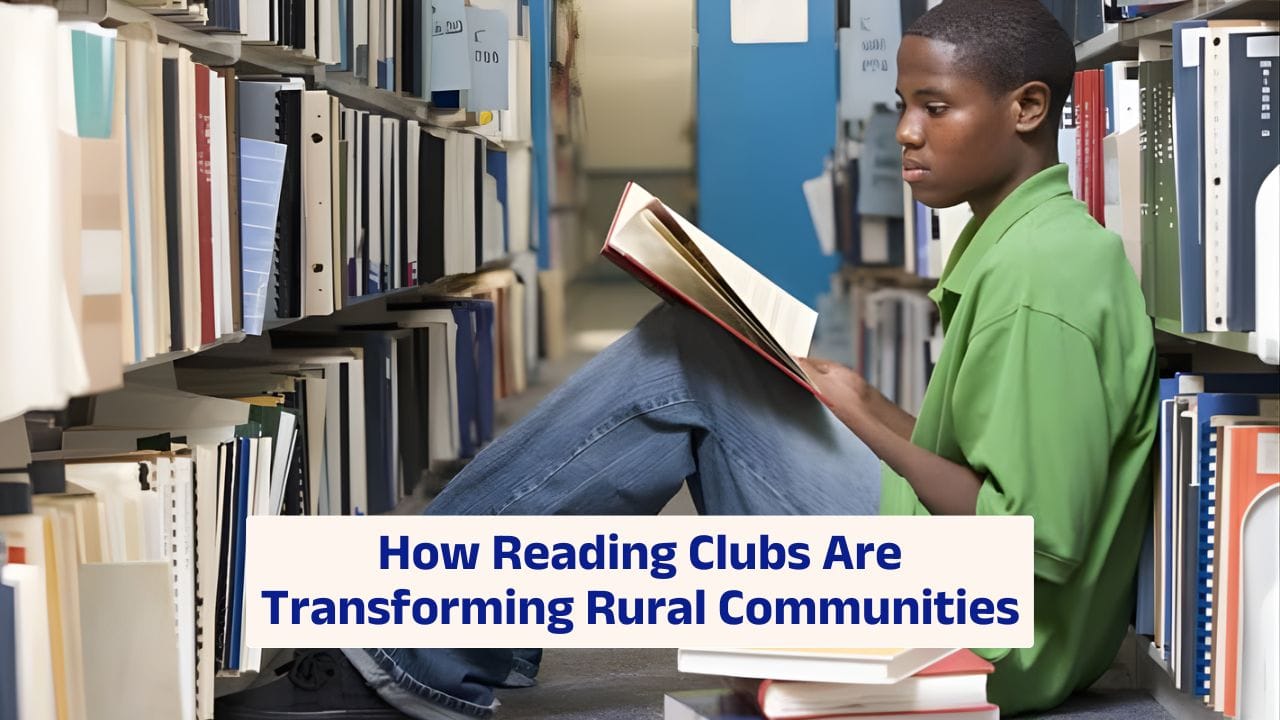
Reading clubs might sound like a city thing, but they’ve been quietly changing lives in rural communities too. In places where access to books is limited and educational support is scarce, these small groups are opening doors—literally and figuratively.
From improving literacy to building stronger social bonds, reading clubs are more than just a pastime; they’re a grassroots movement for community growth.
Access
One of the biggest barriers in rural areas is access—to books, libraries, and even the internet. Reading clubs help bridge that gap. Sometimes held in schools, homes, or under a tree, these clubs make books available where they’re needed most. NGOs and volunteers often donate books, or locals share what they have.
When there’s no library for miles, a simple reading corner becomes a treasure chest. Members take turns reading out loud, discussing stories, and even writing their own tales. It’s not just about reading—it’s about creating a culture of learning.
Literacy
Let’s face it: rural communities often lag behind in literacy rates. But reading clubs are quietly turning the tide. They offer a relaxed, pressure-free space where kids and adults can improve their reading skills. And it’s working. Studies have shown that consistent participation in reading clubs can improve comprehension and vocabulary significantly.
It’s like going to the gym for your brain—reading clubs build those mental muscles. Plus, they make reading feel like fun instead of a chore. Who wouldn’t want that?
Community
Something magical happens when people sit in a circle with a book. Reading clubs don’t just build readers—they build communities. Kids learn teamwork and empathy, parents get involved in their children’s education, and neighbors become friends.
In many rural areas, isolation is a real issue. Reading clubs offer a space for people to connect, talk, and share ideas. They create a sense of belonging, which is priceless.
Empowerment
When you teach someone to read, you’re handing them the keys to a better life. Reading clubs often become platforms for personal growth. They inspire confidence in kids who never spoke up in class before. Adults who once felt left behind now join discussions and lead sessions.
Books expose readers to new ideas and possibilities. They learn about health, finance, rights, and opportunities. That kind of knowledge is empowering, especially in areas where information isn’t always easy to come by.

Leadership
Reading clubs also help uncover natural leaders. You’ll find young teens organizing sessions, adults volunteering to teach, and elders sharing folk tales. These organic leaders become role models and motivators in their communities.
And guess what? Leadership built through reading clubs often spills over into other areas—school boards, women’s groups, local councils. The impact doesn’t stop at the book cover.
Sustainability
You might be wondering: is this just a short-term fix? Not at all. The beauty of reading clubs is that they’re low-cost and easy to sustain. A few books, a meeting space, and a motivated group—that’s all it takes. Once the habit forms, people keep it going.
And with mobile technology, some clubs are now adding e-books to the mix. Imagine a smartphone turning into a mini-library. That’s not the future; it’s already happening in parts of Africa and Asia.
Here’s a quick look at what makes reading clubs so impactful:

| Benefit | Impact Area | Long-Term Effect |
|---|---|---|
| Access to books | Education | Improved literacy |
| Group reading | Social interaction | Stronger community ties |
| Story discussions | Critical thinking | Better communication skills |
| Leadership roles | Personal development | Community involvement |
| Regular sessions | Habit building | Lifelong love for reading |
So, what’s the takeaway? Reading clubs might be small, but they pack a punch. In rural communities, they’re creating a ripple effect of change—boosting literacy, building confidence, and bringing people together.
If you’ve ever doubted the power of a book club, visit a village that has one. The transformation speaks louder than any bestseller list. Reading clubs aren’t just about books; they’re about hope, growth, and community. And sometimes, that’s all it takes to change the world—one page at a time.
FAQs
Why are reading clubs important in villages?
They improve literacy and build community bonds.
Who can join a rural reading club?
Anyone—children, adults, and elders are welcome.
Do reading clubs need a lot of money?
No, they can run with few books and volunteers.
How often do reading clubs meet?
Usually weekly or bi-weekly, based on the group.
Can technology help rural reading clubs?
Yes, mobile phones and e-books expand access.